Every restoration fails eventually. The question is what’s left when it does.
You’ve been told you need a crown – or maybe nobody’s told you anything yet and there’s just a tooth that zings when you bite down, a sharp jolt when you release, cold setting it off, coming and going enough that you’ve been ignoring it.
Either way, the question is the same: does the whole tooth need to be cut down, or just part of it? A full crown means shaving the tooth on every surface. An onlay protects only the parts that need it and leaves the rest of your tooth alone. We check whether an onlay would do the job before considering a full crown, and we can often make it in-house the same day, at a lower cost than a lab-made ceramic.

“Every restoration has a failure point. My job is to make sure that when it comes, there’s still a tooth left to work with.”
Dr NaMoo Park, principal dentist
| From $725 Same-day onlay | Same Day No temporary, no second visit | Consultation $100 We can check your cover on HICAPS on the day |
Why We Prefer Onlays
This is the part most guests never hear, and it’s the whole reason we work the way we do. No restoration lasts forever – not a filling, not an onlay, not a crown. One day it will need replacing. That isn’t pessimism, it’s just how dentistry works.
So the question isn’t only what protects the tooth now, it’s what you’ll have to work with when this eventually fails. If a crown fails, the tooth beneath has been cut down on all sides, and there may be very little left to rebuild on; sometimes the honest answer at that point is extraction, an implant or a bridge, and several thousand dollars. If an onlay fails, more of your natural tooth is still there, and there’s usually enough structure left to restore it again.
Preserving tooth structure today is what buys you options tomorrow. There’s also a cost that isn’t on the invoice: the redo. Every restoration gets replaced eventually, so this isn’t a one-time purchase – it’s the first of several over your lifetime, and the more conservative we are now, the fewer of those cycles you’re signing up for.
Not sure whether a crown is the right option for you? We’re happy to give you an honest assessment – and if a crown genuinely is the answer, we’ll say so.
A Crack Doesn’t Stay Still
We’ve spent this page telling you not to be rushed, so here’s the exception, and it’s the only one. A crack in a tooth does not heal, it travels.
While the crack is contained above the gum, it’s fixable, an onlay holds the tooth together and you keep it. If it reaches below the gum line, the tooth is often no longer restorable by anyone, and the honest answer becomes extraction, then an implant, a bridge, or a gap. A $725 onlay and a $5,700 implant can be separated by a crack travelling a few millimetres.
Nobody can tell you how fast yours is moving; it only ever moves in one direction, and the pain coming and going doesn’t mean it’s healing, cracked teeth are notorious for that. This isn’t a reason to panic, it’s a reason not to leave it for another year. If your tooth hurts when you bite, or gives a sharp jolt when you release the bite, get it looked at while it’s still a $725 problem.
Why Did It Crack in the First Place?
Teeth don’t usually crack for no reason. The most common cause is clenching and grinding, often at night, often without you knowing you’re doing it. If that’s what broke this tooth, fixing the tooth without addressing the grinding usually means we’ll be doing this again with the next one, and restorations placed in a mouth that grinds tend to fail earlier.
So we look at the whole picture: whether other teeth are showing wear or chipping, whether there’s jaw tension or morning headaches, and whether something’s going on with your breathing at night, since grinding and disrupted sleep breathing frequently travel together (see our Sleep Apnea & Snoring page). If grinding is part of your picture, a night guard may protect both the new restoration and the teeth you haven’t broken yet; our Teeth Grinding page covers this in more detail.
What’s the Actual Difference?
A full crown covers the entire tooth. To fit it, enamel is removed from every surface, and the tooth becomes a small peg that the crown sits over. An onlay or overlay covers only the parts that need protecting typically the biting surface and the weakened cusps while leaving healthy walls of your own tooth intact. Both are custom-made and bonded on; the difference is how much of your tooth survives the process.
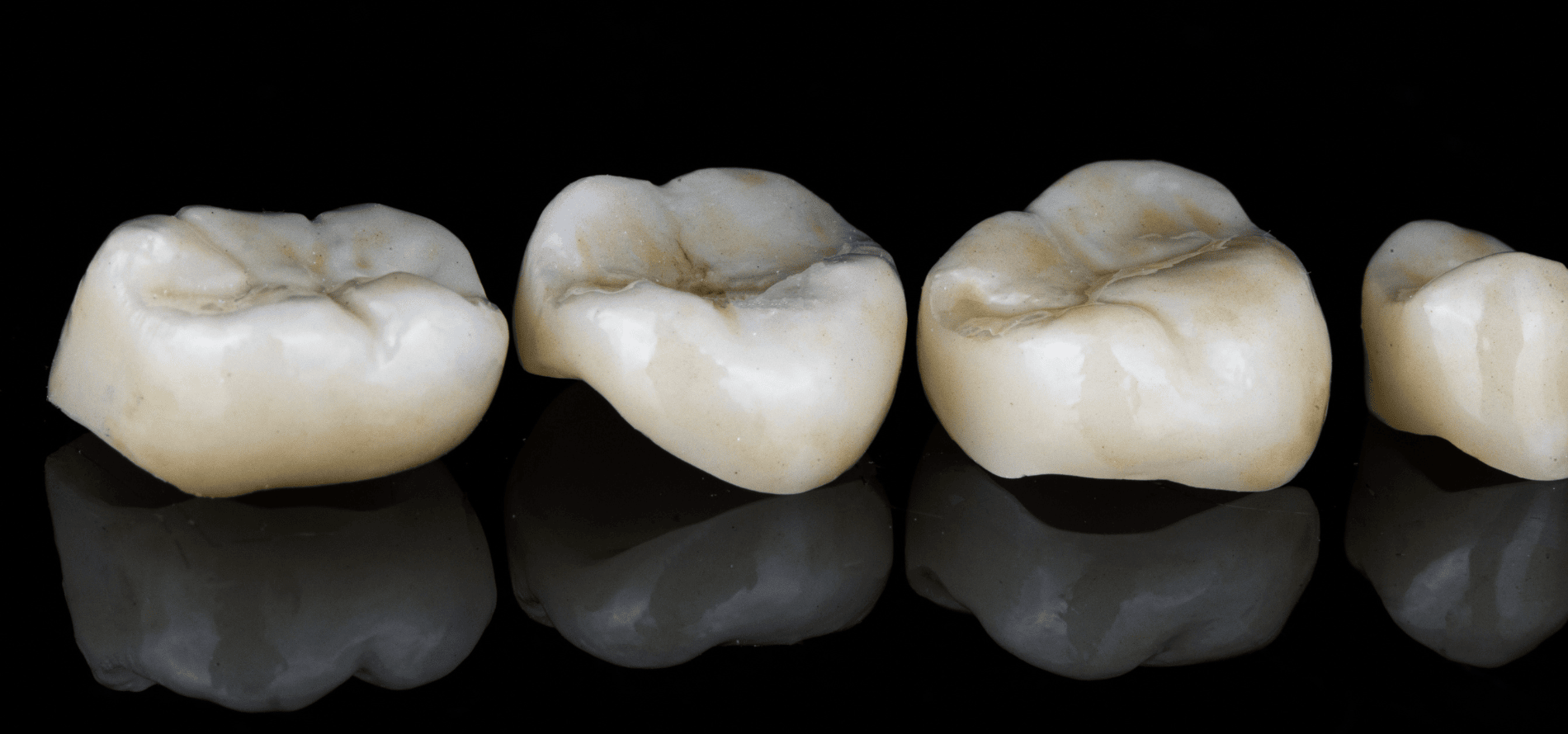
| 3D-printed, same day | Lab-made ceramic | |
| Onlay, 3 surface | $725 | $1,450 |
| Onlay, 4 surface | $875 | $1,750 |
| Onlay, 5 surface | $1,000 | $2,000 |
| Full crown | $1,050 | $2,100 |
Whichever material you choose, the onlay removes only what’s needed and is usually restorable again if it fails one day. A full crown removes enamel from every surface, and if it fails, there may not be enough tooth left to restore. Both protect a cracked tooth equally well.
When a Crown Genuinely Is the Right AnswerWe’ve spent this page arguing for the conservative option, so let’s be equally straight about when the crown wins, because sometimes it clearly does:
We’ll tell you honestly which of these describes your tooth, including when the answer is the crown, and exactly why. |
A Rough Guide to Narrowing It Down
Two treatments, two materials, four prices. Here’s a shortcut, not a diagnosis – just a way of working out roughly which conversation you’re likely to be having.
- Is there still a decent amount of healthy tooth around the damage? If yes, an onlay is likely on the table. If it’s mostly gone, a crown may be the honest answer.
- Is the tooth cracked right through, or is it a weakened cusp or a big old filling? A crack through may need full coverage; a weakened or heavily filled tooth is usually fine with an onlay.
- Do you grind your teeth, or take heavy load on that tooth? If so, we may recommend ceramic over 3D-printed. If not, a same-day 3D-printed onlay at $725–$1,000 may be a good choice.
- Do you need it finished today, or are you happy to wait two weeks for ceramic if your tooth calls for it?
- Is cost the binding constraint? Say so. The range runs from $725 to $2,100, and there’s almost always more than one clinically sound answer.
None of this replaces an examination, but it should tell you roughly where you sit before you walk in.
If This Is After Root Canal Treatment
Let’s be direct about the money upfront, because this catches a lot of people out: the crown is charged separately from the root canal treatment – it’s not included. We’ll tell you the full cost, root canal and restoration, before you start.
A root-treated back tooth usually needs protecting, but it doesn’t automatically need a full ceramic crown. If a same-day 3D-printed onlay will do the job, that’s $725–$1,000 rather than $2,100, and considerably more of your tooth survives. See our Root Canal Treatment page for more on when a tooth is worth saving in the first place.
What It Costs
| 3D-printed, same day | Lab-made ceramic | |
| Onlay, 3 surface | $725 | $1,450 |
| Onlay, 4 surface | $875 | $1,750 |
| Onlay, 5 surface | $1,000 | $2,000 |
| Full crown | $1,050 | $2,100 |
Consultation: $100. If anything further is needed, we explain what, why and how much, and get your agreement before we proceed. We can check your cover on HICAPS at the consultation, so you have a clearer idea of any out-of-pocket cost before you commit – it depends on your policy.
That’s the same tooth, protected two very different ways – and the difference is nearly three times the price, plus a great deal more of your own tooth left standing. Which one is right depends on your tooth, not your budget, but you should know the range exists.
Payment plans are available (terms and conditions apply – see our Payment Plans page). We’d rather do the right treatment on a payment plan than the compromised one in cash; if money is the obstacle, say so – it’s a conversation, not an embarrassment.
Same-Day Restorations, at Half the Ceramic Price
We now make 3D-printed hybrid restorations in-house – designed, produced and fitted in a single appointment. No temporary, no second visit, no two weeks eating carefully on a piece of plastic. You come in, the tooth is prepared, and you leave with the finished restoration bonded in place: an onlay from $725, a full crown at $1,050 – roughly half the ceramic fee.
These materials are newer than ceramics. They perform well, and for a great many teeth they’re a good choice – but ceramic has decades of track record behind it and 3D-printed hybrids don’t yet, and we’re not going to pretend otherwise. For most teeth, a same-day hybrid restoration at a lower cost is a sensible option. For a heavily loaded molar in someone who grinds hard, we may still recommend ceramic, and we’ll explain exactly why. What we won’t do is sell you the newest thing simply because we own the machine.
How It Works
3D-Printed RestorationOne appointment. The tooth is numbed and prepared, we scan it, the restoration is produced here, and it’s fitted and bonded the same day. You walk out finished. | Ceramic RestorationTwo appointments. The tooth is prepared and scanned, and you leave with a temporary made at the chair. The lab makes your restoration, and at the second visit we fit it, check the contacts and the bite, and bond it in. |
Either way, the bite check is not rushed. A restoration that sits a fraction high is one you’ll feel every day for years.
If Dental Work Makes You Anxious
You’re in a good place for that. Much of our work is with guests who feel nervous about dental treatment – people who’ve delayed care for years, or who had a bad experience once and never quite recovered from it.
Crown and onlay appointments are numbed thoroughly before anything begins. The aim is that you feel pressure and vibration, not sharp pain – and if you do feel sharp pain, we stop. That isn’t a formality, it’s how the appointment runs. Tell us when you book and we’ll plan the appointment around it. See our Dental Anxiety and Sleep Dentistry pages for more.
 | Meet Dr NaMoo ParkCrown and onlay treatment at Facial Harmony is led by Dr NaMoo Park, co-owner and principal dentist, registered with the Dental Board of Australia. Facial Harmony is a certified member clinic of the Slow Dentistry Global Network. He considers the tooth, the bite and the teeth around it together and what happens years from now, not just what looks finished today. |
What Happens at Your Consultation
Your $100 consultation is a focused look at the tooth in question. We examine the tooth, the crack or filling and what’s actually left of it, and assess your bite, since that’s often what broke it in the first place. We’ll tell you honestly whether an onlay would do the job or whether a crown is genuinely needed, and we can check your cover on HICAPS at the consultation so you have a clearer idea of any out-of-pocket cost – it depends on your policy. You’ll leave with a clear plan and a clear estimate, and you’re not committing to treatment by coming in.
Not Sure Whether You Need a Crown?We’re happy to give you an honest assessment. Sometimes a crown genuinely is the right call, and we’ll tell you so plainly. Sometimes an onlay would protect the tooth just as well, cost you less, and leave you with more to work with when it eventually needs replacing. You’ll get a straight answer either way – that’s what the $100 buys. |
What This Approach Means for You
Conservative-first. We check whether an onlay would do the job before recommending a crown.
Same-day option. 3D-printed restorations made in-house and fitted the same day.
Transparent pricing. Full costs explained upfront, and we can check your cover on HICAPS before you commit – it depends on your policy.
Anxiety-sensitive care. Numbed thoroughly, and we stop the moment anything feels wrong.
More About Crowns & Onlays
Onlay vs Crown: The Full Comparison
What Materials Do You Use?
How Long Will It Last?
Caring for a Crown or Onlay
Brush and floss normally, but pay real attention to the margin, where the restoration meets your tooth, since that’s where decay starts and it can be hard to spot until it’s advanced. Avoid biting hard objects, and if you clench or grind, tell us – a night guard may protect both the restoration and the tooth underneath it.
Does It Hurt?
The tooth is numbed thoroughly before preparation. The aim is that you feel pressure and vibration, not sharp pain. Some sensitivity in the days after is normal, particularly with a temporary in place, and it usually settles once the final restoration is bonded.
My Old Crown Feels Wrong: High, Loose, or Sensitive
Get it looked at. A crown that sits high will affect your bite and can cause jaw pain. A loose crown lets bacteria underneath, and the tooth can decay without you feeling it. None of these are things to live with, and all of them are cheaper to address early.
Frequently Asked Questions
My tooth hurts when I bite down. What does that mean?
Can a cracked tooth heal?
No. Cracks don’t heal and don’t stay put. The pain often comes and goes, which fools people into thinking it’s resolving — it only ever travels in one direction.
What happens if I leave a cracked tooth?
Sometimes nothing, for a while. But if the crack reaches below the gum line, the tooth often becomes unrestorable and the honest answer is extraction, followed by an implant or bridge at several thousand dollars.
Why did my tooth crack?
Often grinding, frequently at night and frequently without you knowing. Fixing the tooth without addressing the grinding usually means we’ll be doing this again with the next one.
My crown fell off or feels loose, what should I do?
Get it looked at soon. A loose crown lets bacteria underneath and the tooth can decay without you feeling anything. Sometimes it can simply be re-cemented, sometimes there’s decay beneath it that needs dealing with first.
How do I know when an old crown needs replacing?
Sensitivity, a dark line at the gum, food catching, or a crown that feels high or loose are all worth checking. Decay at the margin is the usual culprit and it’s often painless until it isn’t.
Do I actually need a crown?
Not always. Many teeth that get crowned would be protected just as well by an onlay, which preserves more of your natural tooth and costs less.
What's the difference between a crown and an onlay?
A crown covers the entire tooth, cutting it down on every surface. An onlay covers only the parts that need protecting, leaving healthy tooth structure intact.
Why does it matter how much tooth is left?
Because every restoration eventually needs replacing. When an onlay fails there’s usually enough tooth left to restore again; when a crown fails, sometimes there isn’t.
How much does a crown cost in Box Hill?
A same-day 3D-printed crown is $1,050, a lab-made ceramic crown is $2,100. Onlays start at $725 (3D-printed) or $1,450 (ceramic). The consultation is $100.
Is an onlay cheaper than a crown?
Yes, and it preserves more of your tooth: less tooth removed means less work and less material.
Do root canal-treated teeth always need a crown?
No. Many root-treated back teeth do need protecting, but that protection is often an onlay rather than a full crown.
Is the crown included in the root canal price?
No, it’s charged separately. We’ll tell you the total cost of the root canal and the restoration before you start anything.
Do you do same-day crowns?
Yes. We make 3D-printed hybrid restorations in-house, fitted in a single appointment, roughly half the price of a lab-made ceramic.
Are 3D-printed restorations as good as ceramic?
They perform well and for many teeth they’re a good choice, but ceramic has decades of track record and these materials are newer. We’ll choose based on your tooth, not on what’s newest.
Why are 3D-printed restorations cheaper?
Because we make them here rather than sending the work to a dental laboratory, which removes the lab fee, the courier, the temporary and the second appointment.
How long do crowns and onlays last?
Nobody can honestly promise a number of years. It depends on your bite, whether you grind, and how much healthy tooth was there to bond to.
Can I eat normally?
Yes, once it’s fitted and the bite is checked. Be careful with the temporary in the meantime — it’s not designed for hard or sticky foods.
Do you offer payment plans?
Yes. Terms and conditions apply, and we’ll explain them fully before you commit.
I've been quoted for a crown elsewhere. Can I get a second opinion?
Second opinions are a completely reasonable thing to seek before committing to something permanent. We’ll give you an honest assessment – sometimes a crown genuinely is right, and we’ll say so; sometimes an onlay would do the job for less.