Dental Bridges in Box Hill
You’re probably here because a tooth is missing, or is about to be, and you’re trying to work out the options and what each one may cost.
One of the decisions you may be weighing up is a dental bridge versus an implant.
Traditional bridge (three-unit): from $6,000. Single implant and crown: from $5,700.
The bridge price is from $6,000 for a standard three-unit zirconia bridge. Longer spans, gold or precision components cost more, and we’ll give you a clear estimate for your situation before treatment begins.
The price alone doesn’t tell you which option is right for you. A traditional bridge uses the teeth on either side of the gap for support, which generally requires those teeth to be prepared. A dental implant replaces the missing tooth without relying on the neighbouring teeth for support.
But an implant isn’t automatically the better option. Suitability depends on factors including the condition of the neighbouring teeth, your gums, the available bone, the position of the missing tooth and your general health.
If there isn’t enough bone to support an implant, or if the teeth beside the gap would benefit from restoration for other reasons, a bridge may be an appropriate option.
We’ll assess the gap and the surrounding teeth first, then talk you through the options, expected costs, advantages and limitations before you decide.

| $2,400 Maryland bridge, from | $5,700 Implant, from | 2 to 4 Weeks for a bridge |
What a Bridge Actually Costs You, Beyond Money
A traditional bridge works by using the teeth on either side of the gap to support a replacement tooth.
To prepare these supporting teeth for crowns, some natural tooth structure generally needs to be removed. That change is irreversible, which is an important consideration when the neighbouring teeth are otherwise healthy.
Sometimes a bridge is genuinely the right answer. If the adjacent teeth are already heavily restored or would benefit from crowns for other reasons, using them to support a bridge may make sense. But it should be a considered decision, based on the condition of your teeth and the alternatives available to you.
A certified member clinic of the Slow Dentistry Global Network.
Dr NaMoo Park
Principal dentist, registered with the Dental Board of Australia.
A traditional bridge may require changes to the teeth beside the gap. Sometimes that trade-off is appropriate. We think you should understand it before you decide.
Your Four Options in Box Hill: The Honest Breakdown
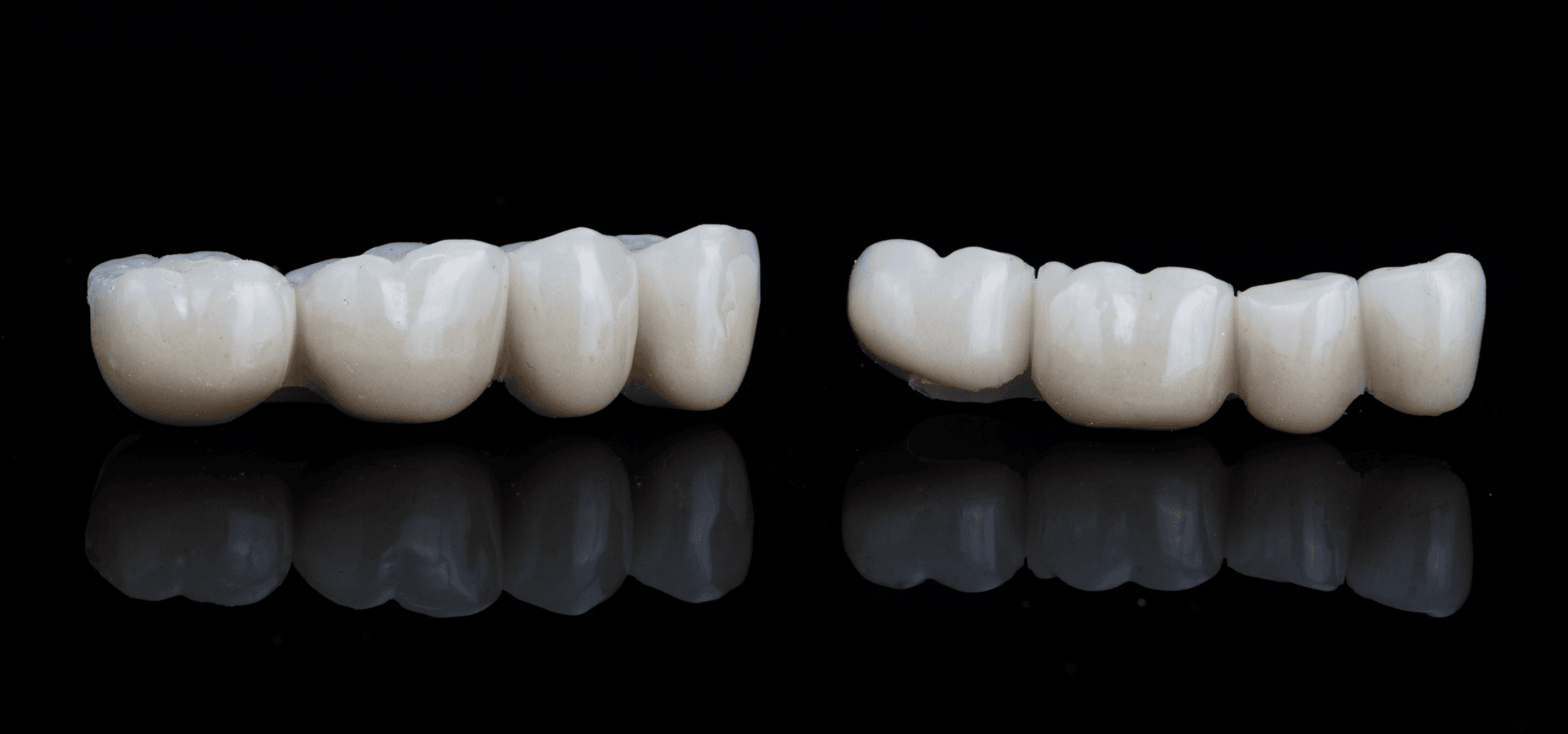
Comparing bridge and implant options at Facial Harmony Box Hill.
Four options, four prices, plus bone, timing and surgery. Here’s the honest comparison, laid out plainly.
| Option | Cost | What it involves |
| Maryland bridge | From $2,400 | Bonded to the backs of neighbouring teeth. Little or no enamel removed. Only suitable for certain teeth and bites, usually at the front. |
| Implant + crown | From $5,700 | Anchored in the jaw. Doesn’t touch neighbouring teeth at all. Requires adequate bone and a minor surgical procedure. |
| Traditional bridge | From $6,000 | Fixed in place. Requires preparing two healthy teeth, removing enamel that doesn’t grow back. |
| Partial denture | From $1,900 | The lowest upfront cost. Removable, less stable, and it doesn’t preserve the bone underneath. |
Notice the order: the most conservative option is among the cheapest, and the one that removes the most healthy tooth structure is among the most expensive. That’s not an accident of pricing – it reflects what these treatments involve to do properly. A partial denture is from $1,900 and a Maryland bridge is from $2,400, so for around $500 more you can move from something removable to something fixed, without preparing healthy teeth.
A Rough Guide to Narrowing It Down
It’s a lot to hold in your head. Here’s a shortcut, not a diagnosis just a way of working out which conversation you’re likely to be having.
Are the teeth either side of the gap already crowned or heavily filled? A traditional bridge makes real sense, since there’s little healthy enamel left to protect. If not, think carefully before preparing healthy teeth for a bridge.
Is the missing tooth near the front, with a favourable bite? Possibly a Maryland bridge, from $2,400, with your healthy teeth left intact.
Do you have enough bone, and are you open to a minor surgical procedure? An implant may be a suitable option, and it doesn’t affect the neighbouring teeth.
Need it finished in weeks, not months? A bridge is faster, and that’s a legitimate reason to choose it.
None of this replaces an examination. Bone volume and bite aren’t things you can assess from a webpage but it should tell you roughly where you sit before you walk in.
The Maryland Bridge: The Conservative Option Worth Checking First
If your missing tooth is at the front and your bite allows it, there’s a bridge that doesn’t require preparing healthy teeth. A Maryland (resin-bonded) bridge uses thin wings bonded to the backs of the neighbouring teeth, rather than crowning them, so little or no enamel is removed.
It isn’t right for everyone. It’s generally limited to front teeth, it needs a favourable bite, and it isn’t as strong as a traditional bridge under heavy load. But it’s the first thing we check for, because if it works for you, it’s from $2,400 instead of from $6,000, and your teeth stay intact.
When a Bridge Is Genuinely the Better ChoiceWe’ve spent this page telling you to think twice about a bridge. So let’s be equally straight about when it’s the right answer, because for a lot of people, it is.
We’ll tell you honestly which of these describes you – including when the answer is the bridge, and why. |
What if I Just Leave the Gap?
It’s the fifth option, and a lot of people quietly choose it. Sometimes it’s reasonable: a single missing back tooth, in a stable bite, with good hygiene, can often be monitored rather than replaced. Sometimes it isn’t, since teeth tend to drift into a gap and the bite changes over time.
Once a tooth is gone, the bone that held it slowly begins to shrink. That’s not a reason to rush into treatment, but it is a reason not to leave the decision open indefinitely, since waiting quietly narrows your choices.
What Happens if a Bridge Fails
Worth understanding before you choose one. A bridge is held up by the two teeth either side, and those teeth have had their enamel removed and are sealed under crowns, so they can still decay underneath. When a bridge fails, you don’t lose one tooth, you lose three, and the options for fixing that are considerably more expensive than what you were choosing between today.
If Cost Is What’s Stopping You, Say So
Money is the reason most people delay this, and it’s also the reason a lot of people end up with the wrong treatment for the wrong reason. Health funds cover more of this than most people expect: bridges, crowns and dentures usually fall under major dental extras. We can check your cover on HICAPS at the consultation, so you have a clearer idea of any out-of-pocket cost — it depends on your policy and level of cover.
Payment plans are available too — terms and conditions apply, and we’ll explain them in full before you commit to anything. We’d rather do the right treatment on a plan than the wrong one in cash, so if money is the obstacle, our Payment Plans page covers how instalments work.
If the Word “Surgery” Is What’s Putting You Off
Implant placement is usually a much smaller experience than people imagine. It’s done under local anaesthetic, typically in under an hour, and for many people it’s more straightforward than they expect. If you’re anxious, IV sedation is available for suitable guests, and for selected complex cases a general anaesthetic can be arranged through our partner facility.
Choosing to avoid surgery is a completely legitimate reason to have a bridge, and we won’t try to talk you out of it. But fear of the word alone is a poor reason to prepare two healthy teeth. If dental anxiety is part of the picture, our Sleep Dentistry and Dental Anxiety pages cover the options in full.
How We Approach This Decision
This decision has a wrong answer, and it’s expensive and permanent. Preparing two healthy teeth for a bridge that costs more than the implant which would have left them alone is a genuinely bad outcome and the wrong choice usually comes down to not seeing the options and their costs laid out plainly. So that’s what we do.
We lay them side by side. We place implants, we make bridges, and we fit dentures, and we have no reason to steer you toward any of them except the one that’s actually right for your mouth.
 | Meet Dr NaMoo ParkBridge treatment at Facial Harmony is led by Dr NaMoo Park, co-owner and principal dentist, registered with the Dental Board of Australia. Facial Harmony is a certified member clinic of the Slow Dentistry Global Network. He considers how replacing one tooth affects your whole bite, the teeth around it, and the bone underneath, because a gap is never really about the gap. |
What Happens at Your Consultation
A focused $100 assessment of the gap and your options. We examine the gap, the neighbouring teeth and your bite, assess the bone (imaging may be needed, and we’ll explain the cost first), and tell you which of the four options genuinely suit you and which don’t. We can check your cover on HICAPS at the consultation, so you have a clearer idea of any out-of-pocket cost – it depends on your policy – and you leave with a clear plan and a clear estimate.
Before You Commit to Anything Permanent
Not with a decision, just with the numbers in front of you. We’ll tell you honestly whether a Maryland bridge would do the job, whether an implant would suit you better since it doesn’t affect the neighbouring teeth, whether a denture makes more sense, or whether the gap can simply be watched for now.
Consultation $100. Maryland bridge from $2,400, implant from $5,700, bridge from $6,000, denture from $1,900. We can check your cover on HICAPS on the day some funds may contribute, depending on your policy.
Considering a Bridge and Want a Second Opinion?That’s a completely reasonable thing to do before committing to something permanent. We’re happy to give you an honest assessment of your options – whether a bridge is the right choice for your situation, or whether something more conservative would do the job. If a bridge genuinely is the right answer for you, we’ll tell you that plainly. This is an expensive, long-term decision, and it’s worth being sure before you go ahead. |
The Dental Bridge Process, Step by Step
| 1Consultation and Evaluation Assessing your oral health, the gap, and the adjacent teeth or jawbone. | 2Treatment Planning Determining the right type of bridge, or an alternative, and the steps involved. | 3Preparation For a traditional bridge, adjacent teeth are shaped to support the crowns, and impressions are taken. | 4Fabrication Your bridge is custom-made to match your natural teeth, with a temporary worn meanwhile. | 5Placement The final bridge is checked for fit and bite comfort before being bonded or cemented. |
More About Dental Bridges in Box Hill
Bridge vs Implant: The Honest Comparison
Upfront cost: at our clinic the implant (from $5,700) is a little lower than the traditional bridge (from $6,000).
The clearer difference is what each does to your teeth and jaw. The bridge permanently removes enamel from two healthy teeth; the implant doesn’t touch them, and it helps maintain the bone in the jaw where the bridge doesn’t. Which one suits you depends on your bite, your oral hygiene, and the health of the neighbouring teeth.
Where the bridge genuinely wins: if the neighbouring teeth are already crowned or heavily filled, there’s little left to protect, and it restores three teeth at once. It’s also faster, with no healing period.
Types of Bridge
Maryland (resin-bonded): wings bonded to the backs of the neighbouring teeth. Minimal or no enamel removed, usually front teeth and favourable bites only, from $2,400. Traditional (three-unit): crowns on both neighbouring teeth, with a false tooth suspended between, from $6,000. Cantilever: supported on one side only, where there’s just one suitable neighbouring tooth. Implant-supported: the bridge is anchored to implants rather than natural teeth, so no healthy teeth are touched – relevant for larger gaps.
How Long Does a Bridge Last?
We won’t give you a number of years, because nobody honestly can. How long yours lasts depends on your bite, your oral hygiene, and above all the health of the two teeth holding it up – the teeth under a bridge can still decay, which is why cleaning and regular review matter so much.
Caring for a Bridge
Brushing alone won’t do it. You need to clean under the pontic with floss threaders, interdental brushes or a water flosser, and we’ll show you exactly how – because a bridge that isn’t cleaned properly will fail at the supporting teeth, which are the teeth you can’t get back.
Is It Covered by Health Insurance?
Bridges, crowns and dentures are usually claimable under major dental extras, subject to your annual limit and waiting periods, while implants are covered less consistently. You don’t need to work this out yourself – we can check your cover on HICAPS at the consultation, so you have a clearer idea of any out-of-pocket cost for each option. It depends on your policy, annual limit and waiting periods.
Does It Hurt?
The teeth are numbed before preparation, so the aim is that you feel pressure and vibration, not sharp pain. Implants are placed under local anaesthetic, and sedation options are available for anxious guests. If dental treatment worries you, our Sleep Dentistry and Dental Anxiety pages cover what’s available.
Dental Bridges in Box Hill: Frequently Asked Questions
Is a bridge cheaper than an implant?
At Facial Harmony, no. A traditional bridge is from $6,000 and a single implant with crown is from $5,700. The implant is cheaper upfront, and it doesn’t require preparing your healthy teeth.
Will a bridge damage my healthy teeth?
A traditional bridge permanently removes enamel from the two teeth either side of the gap. That enamel doesn’t grow back, and those teeth will need crowns from then on.
What's a Maryland bridge?
A more conservative bridge, bonded to the backs of the neighbouring teeth rather than crowning them, with little or no enamel removed. From $2,400, usually limited to front teeth and favourable bites.
How much does a dental bridge cost in Box Hill?
Maryland bridge from $2,400. Traditional three-unit bridge from $6,000. For comparison: single implant and crown from $5,700; partial denture from $1,900. Consultation $100.
Do I have to replace a missing tooth?
Not always immediately. Teeth do tend to drift into a gap and the bite can change, but how much it matters depends on which tooth it is.
How long does a bridge last?
We won’t give you a number of years, because nobody honestly can. How long yours lasts depends on your bite, your oral hygiene, and above all the health of the two teeth holding it up – the teeth under a bridge can still decay.
Is a bridge covered by health insurance?
Usually under major dental extras, subject to limits and waiting periods. Implants are covered less consistently. We can check your cover on HICAPS on the day – it depends on your policy.
Can I eat normally with a bridge?
Yes, once fitted and the bite is checked, though very hard or sticky foods are best avoided.
What if my neighbouring teeth already have crowns or big fillings?
Then a bridge makes considerably more sense, since there’s little healthy enamel left to protect, and it restores three teeth in one treatment.
Is a denture my cheapest option?
It’s the cheapest, but the margin is smaller than most people expect. A partial denture starts at $1,900, and a Maryland bridge is $2,400.
Do you offer payment plans?
Yes. Terms and conditions apply, and we’ll explain them fully before you commit to anything.
How long does each option take?
A bridge is usually complete in two to four weeks. An implant typically takes three to six months, since it needs time to integrate with the bone before the crown is fitted.
Is implant surgery as bad as it sounds?
It’s usually a much smaller experience than people imagine. Most implants are placed under local anaesthetic in under an hour, and IV sedation is available for suitable guests.
Does waiting make things worse?
Slowly, yes. The bone that held the tooth gradually shrinks, and bone is what an implant needs. It’s not an emergency, but it is a reason not to leave the decision open for years.
What if I can't have an implant?
Inadequate bone, certain medical conditions, or heavy smoking may rule an implant out or require bone grafting first. A bridge or denture may then be the right answer.